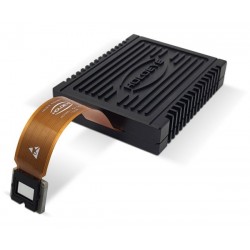
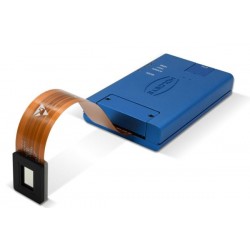
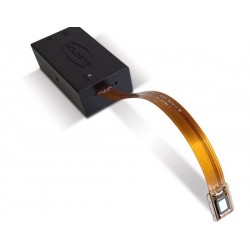
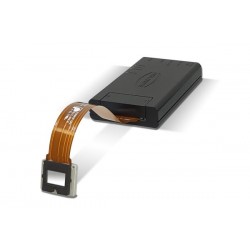
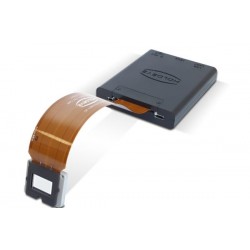
LETO-720 Fast LCOS Spatial Light Modulator
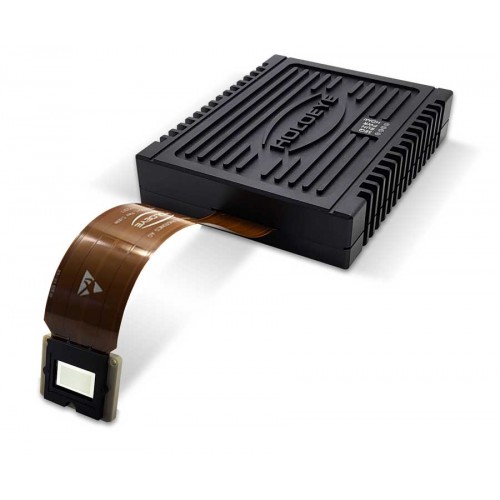
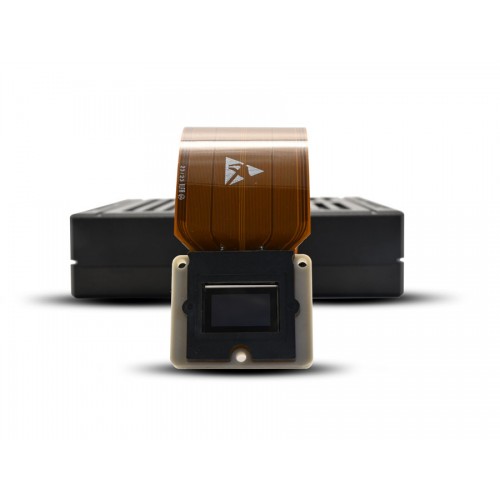
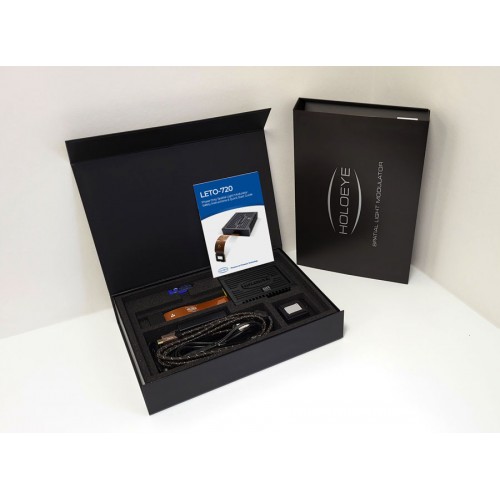
- Stock: Contact us for details
- Click here to: Contact us
- Model: HOLOEYE LETO

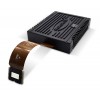
The LETO-720 combines the high data bandwidth and low latency of the 4K resolution GAEA-2.1 (4k – 60fps – RGB888) driver and a fast display version of the LETO-3 SLM with a resolution of 1920 × 1080 pixels (~1 ms response-time at 520 nm).
LETO-720 LCOS SLM – Microdisplay Features 
- Display Type: Reflective LCOS (Phase Only)
- Resolution: 1920 x 1080 Pixel
- Pixel Pitch: 6.4 µm
- Fill Factor: 93 %
- Active Area: 12.29 x 6.91 mm (0.55″ Diagonal)
- Addressing: 8 Bit
- Signal Formats: HDMI – HDTV Resolution
- Input Frame Rate: 240 Hz
- Display Update Rate: 240 Hz
- 720 Hz (RGB coded)

The LETO-720 SLM offers 2 modes:
240 Hz mode: This mode utilizes the high video data bandwidth of the driver to address real 240 Hz data on the SLM. The refresh rates for both, input frames via the HDMI graphics interface and the output, are boosted to 240 Hz.
720 Hz modulation (RGB coded): This mode makes use of the RGB color channels in addition to the 240 Hz mode. Three consecutive monochrome images are stacked in one full-color image.
Versions
We currently offer one version optimized for the VIS range between 420 to 650 nm.

Reflectivity: 62-72%
Max. Phase Shift: 2.2 Pi @ 633 nm
Wavelength Range: 420 - 650 nm
Please contact us for the latest price.
 SLM-Brochure_2025
Elementary Optical Functions
The HOLOEYE Spatial Light Modulator Pattern Generator software was developed for use with all HOLOEYE SLM models. The software allows the simple generation of diverse dynamic optical functions like gratings, lenses, axicons and apertures as well as the calculation of diffractive optical elements (DOE) from user defined images.
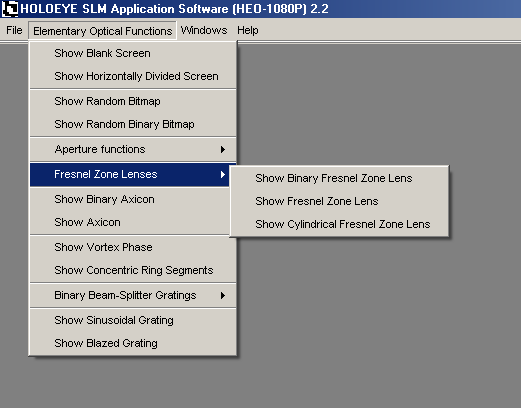
Besides the generation of DOEs a wide range of basic optical functions can be created directly via the menu bar. After input of the required parameters the output image appears in a new window. There are several binary and multilevel optical functions possible:
- Blank Grey Level Screen
With this function you can create a homogeneous gray level screen.
- Horizontally Divided Screen
With this function you will create a horizontally divided screen, consisting of two homogeneous graylevel partial screens.
- Random Bitmap
With this function you will create a random pixel distribution using 256 grayscale values. This function can be used to realize the optical function of a random phase plate.
- Aperture Functions
- Rectangular Aperture
- Circular Aperture
-Single Slit and Double Slit
- Fresnel Zone Lenses
-Binary Fresnel Zone Lens
-Multilevel Fresnel Zone Lens
-Cylindrical Fresnel Zone Lens
- Binary Axicon
With this function you will create a Binary Axicon graylevel image representation.
- Axicon
With this function you will create a 256-level Axicon graylevel image representation.
- Vortex Phase
Use this function to create a 256-graylevel image representation of a vortex phase.
- Concentric ring segments
Use this function to create binary images consisting of concentric ring segments.
- Binary beam-splitter gratings
-Linear Gratings and Crossed Linear gratings
-Exemplary binary beam-splitter designs
- Sinusoidal Grating
With this function you will create a sinusoidal grating.
- Blazed Grating
With this function you will create a blazed grating.
- Calculating a beam-shaping phase function for Gaussian Input beams
-Transformation of a Gaussian beam to a circular ‘flat-top’ beam
-Transformation of a Gaussian beam to a rectangular ‘flat-top’ beam
- Superposition with an additional phase map
- e.g. for compensation of aberrations of the optical system or of the SLM